

Mixed Reality: a hybrid between Augmented Reality and Virtual Reality

Written by
Team KeyWe
Augmented Reality
Mixed Reality
Let's define these new technologies, discover their various applications and future developments.
What is Mixed Reality (MR)
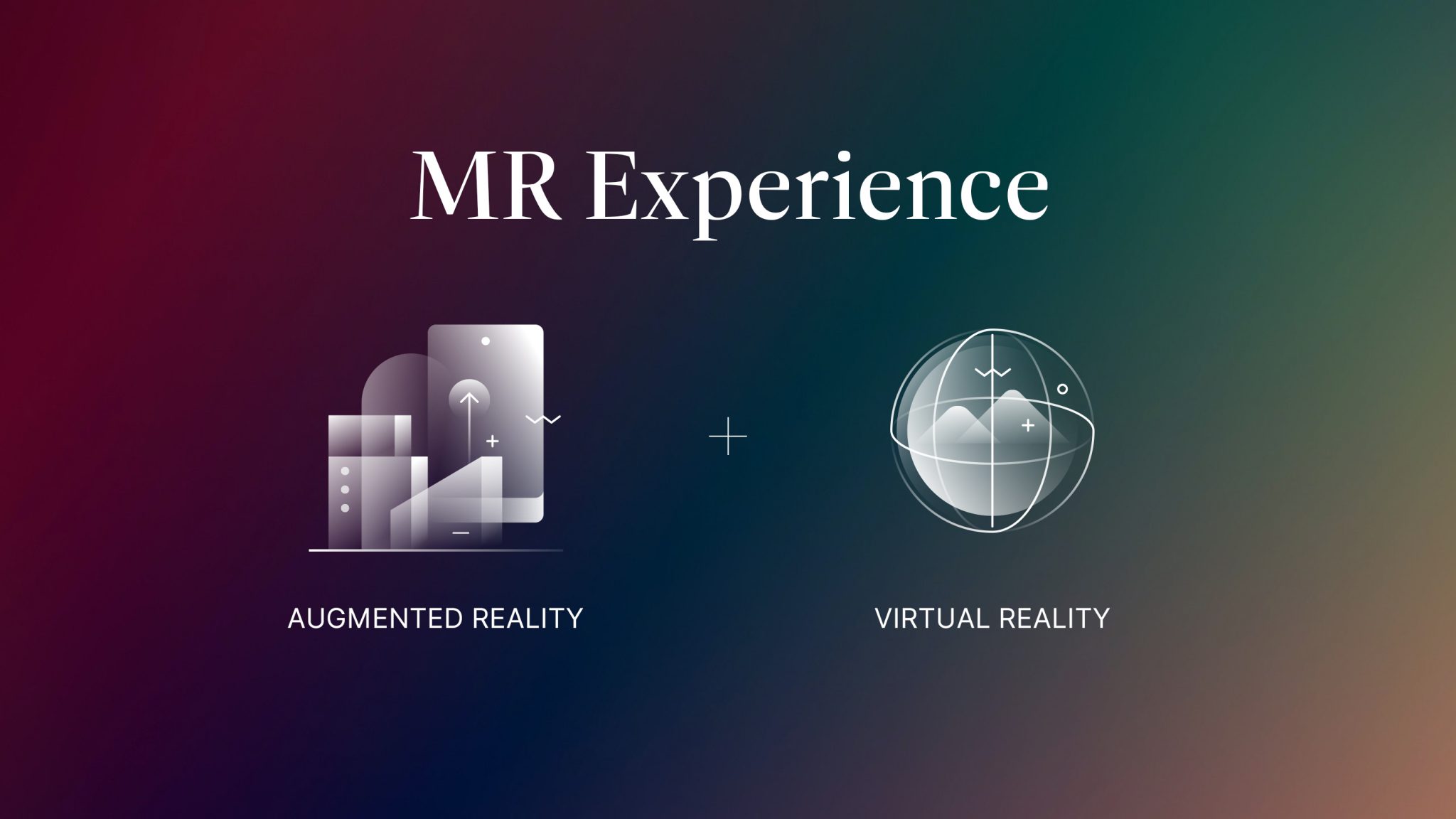
Mixed Reality is a technology that blends the real world with virtual elements. A hybrid of Virtual Reality and Augmented Reality, it enables advanced immersive experiences. It allows users to interact with virtual objects inserted into the real world around them.
MR has revolutionary potential, capable of transforming our perception of and interaction with our surroundings. This technology opens up new possibilities for entertainment, education, marketing and many other sectors.
How Mixed Reality works
Mixed Reality is the result of the combination of two different technologies: Virtual Reality and Augmented Reality.
Virtual Reality (VR) is an immersive technology that, through special headsets, transports users into a realistically simulated computer-generated world. It allows users to explore environments that would otherwise be inaccessible or impossible to create in real space.
Augmented Reality (AR) superimposes virtual elements onto the real world through devices such as smartphones, tablets or glasses. It offers an interactive experience that allows users to expand and learn about the space around them.
Read more about VR, AR and Mixed Reality
Differences between Virtual Reality and Augmented Reality
Virtual Reality and Augmented Reality are among the most advanced technologies of the moment. Despite their growing popularity, these two terms are often confused with each other.
This is understandable: both technologies have the ability to connect the physical world to the digital world. However, there are substantial differences between the two, as their objectives and areas of application are different.
| Virtual Reality | Augmented Reality | |
|---|---|---|
| 1 | It creates a computer-simulated environment in which to immerse oneself. Interaction is provided by feedback involving the five senses. | It overlays virtual elements onto the real world, allowing users to interact with both simultaneously. |
| 2 | Users are isolated from the real world, immersed in a virtual, three-dimensional environment through a headset. | Users view virtual elements through devices such as smartphones, tablets or dedicated glasses. |
| 3 | The experience transports the user to otherwise inaccessible environments. | It enriches the real surrounding environment with additional information, instructions and interactions. |
| 4 | Immersive experiences are often used in gaming, training and entertainment. | It enhances the user experience of e-commerce and is ideal for sectors such as education, design, industry, and the medical sector. |
Virtual Reality: objectives and applications
Virtual Reality creates a highly realistic simulated environment. Its purpose is to transport people into virtual worlds that can be completely different from everyday reality. Through an immersive experience, users experience new situations and interact with environments that would otherwise be inaccessible or dangerous.
Virtual Reality is already revolutionising entire market sectors. One example is industrial design: engineers can create and test prototypes virtually before physically building them. In the medical field, VR is used for trauma therapy. Another example is the architecture sector, which is evolving to allow clients to virtually explore buildings that have not yet been built.
In short, Virtual Reality aims to expand human possibilities, improve process efficiency and enrich our experience in the real and virtual world.
Augmented Reality: objectives and applications
Augmented Reality superimposes digital information and objects onto the real world. The elements produced by the technology integrate with the surrounding physical context, offering new ways of understanding the world. The space around us expands, becomes enriched with information and, in short, becomes “augmented”.
Augmented Reality has applications in various sectors, such as education, marketing, design and entertainment. For example, in education, students can view interactive three-dimensional models to learn complex concepts in a more engaging way. In marketing, Augmented Reality is used to create virtual shopping experiences: people can try out products digitally before buying them.
The primary goal of Augmented Reality is to enrich our perception of the world, making experiences more informative, engaging and interactive.
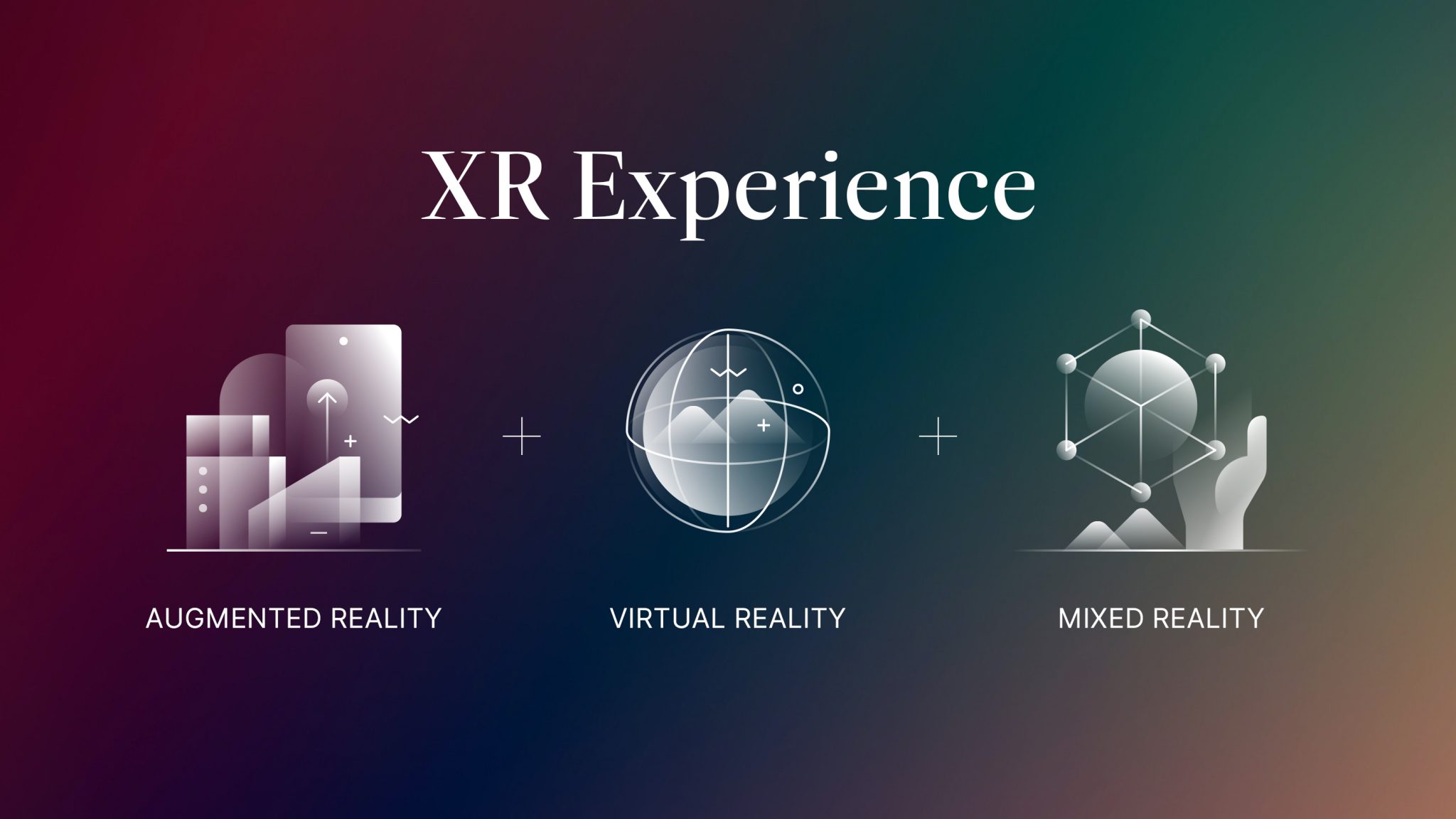
What to expect from the future: Extended Reality (XR)
Extended Reality is a term that encompasses Virtual Reality, Augmented Reality and Mixed Reality.
XR has the potential to personalise the world around us through devices that enhance our perception. When this technology reaches its maximum level, we can no longer distinguish between the virtual and real worlds: the perceptual experience is radically transformed.
KeyWe’s approach
KeyWe is the strategic partner with whom to explore the potential of new technologies. The agency has already created physical-digital experiences for commercial events, in which products and services are presented in an immersive and memorable way.
Day after day, the agency supports companies in selecting the most suitable technology for their various marketing objectives. The solutions developed are always user-centred and meticulously detailed. The approach is consultative, and the result is always personalised.
Written by
Team KeyWe